
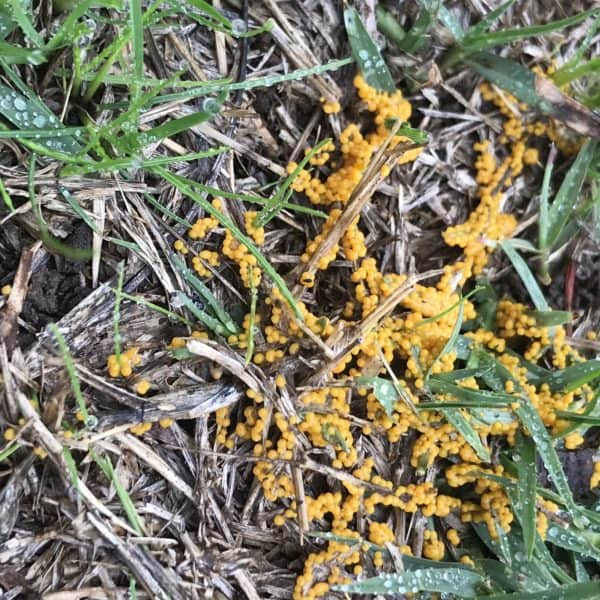
Slime Mould affects all turfgrass species and can take on various appearances from a dusty spore to yellow spheres like caviar. It can smother grass blades, turning them grey, pink, purple, white or yellow. The affected turf forms patches up to 60 cm in diameter and it grows outwards, yet there is no immediate damage to the turfgrass.
Slime Moulds are not plant parasitic. The fruiting moulds can become that thick on the leaf that the photosynthetic ability of individual leaves is greatly reduced. When this is a problem in a worst case situation. Expect the moulds to disappear in a few weeks when treated with professional lawn care products.
Like many other diseases, excessive thatch contributes to Slime Mould development. High levels of organic matter in the soil are a source of food for Slime Mould. The disease thrives in cool, wet, humid weather and un-maintained turf with infrequent mowing.
Although Slime Mould is unsightly it is not a problem that normally requires attention.
Contact Lawn Addicts for advice.