
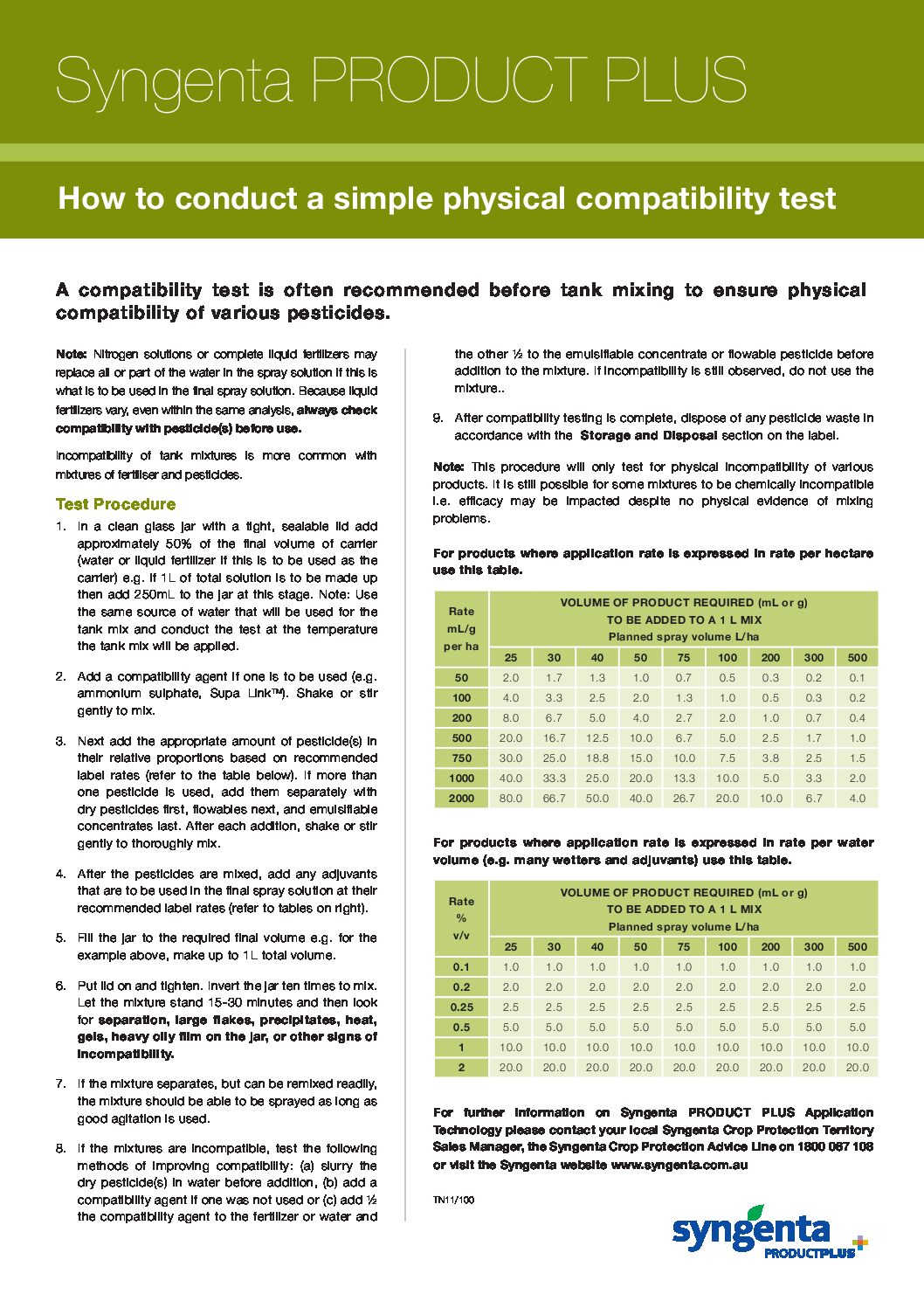
A compatibility test is often recommended before tank mixing to ensure physical compatibility of various pesticides.
Syngenta Product Plus – How to test procedure for capability of chemicals
Quick & Easy Guide: Mixing Lawn Sprays Safely
Why it matters:
Before you mix pesticides with fertilizers or other chemicals, always check they play nicely together. Even slight changes in fertilizer formulas can cause messy reactions or reduce effectiveness.
Step-by-Step Compatibility Test
Grab a clean jar (approximately 1 L capacity with a tight lid or large measuring jug).
Add half the final mix volume (e.g. 250 mL water or liquid fertiliser, using the same water you’ll use in the spray and at the spray temp)
Stir in any compatibility agent – if you’re using one. Mix gently.
Add your pesticide(s):
Use label dose rates, scaled for 1 L.
Sequence: Dry powders first → then flowables → lastly emulsifiable concentrates. Mix after each addition
Add any spray adjuvants (based on manufacturer’s dosage) and stir.
Fill up to the final volume (e.g. 1 L total), secure the lid, then gently invert the jar 10 times or mix for approximately 30 seconds.
Let it sit for 15–30 minutes, then check for:
Clumps, separation, gelling, warmth or oily films.
If it separates but re-mixes easily, it’s OK to spray with continuous agitation.
If it stays separated, it’s a no-go.
Trouble mixing? Try these fixes:
Pre-mix dry pesticides in water.
Add or split a compatibility agent between water and pesticide.
If incompatibility persists, do not use the mix.
Dispose of leftovers responsibly following the product’s disposal instructions
This simple jar-test helps you avoid mixing disasters—protecting your lawn or garden while preserving the effectiveness of your chemicals. Think of it like a “taste test” for your spray before it hits your lawn!