
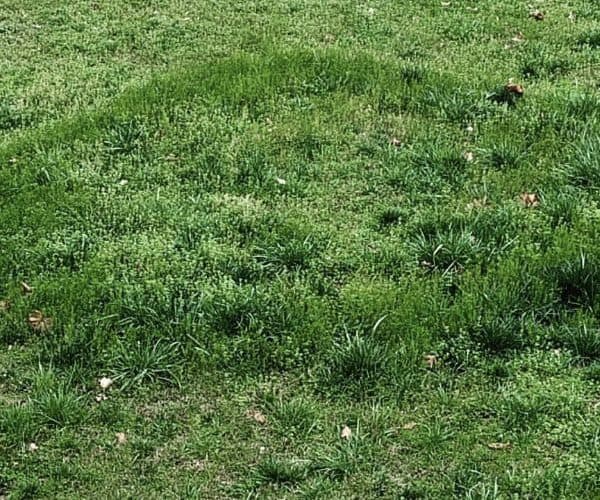
Fairy Ring is caused by the Basidiomycetes, group of fungi of which there are at least 50! species known to cause it.
It is also indiscriminate to turf varieties; all species of turf can be affected by it.
Fairy ring tends to occur most often in soils and turf grasses with no to little nutritional inputs, heavy thatch layers and low soil moisture. Unlike other diseases fairy ring fungi does not directly infect the grass, instead opting to affect the soil profile, causing the changes we see.
There are 3 recognised types they are known as Type 1, Type 2, Type 3.
Type 1.
Symptoms – Dead or wilted grass from lack of water. surrounded by dark green grass. Sometimes mushrooms are visible
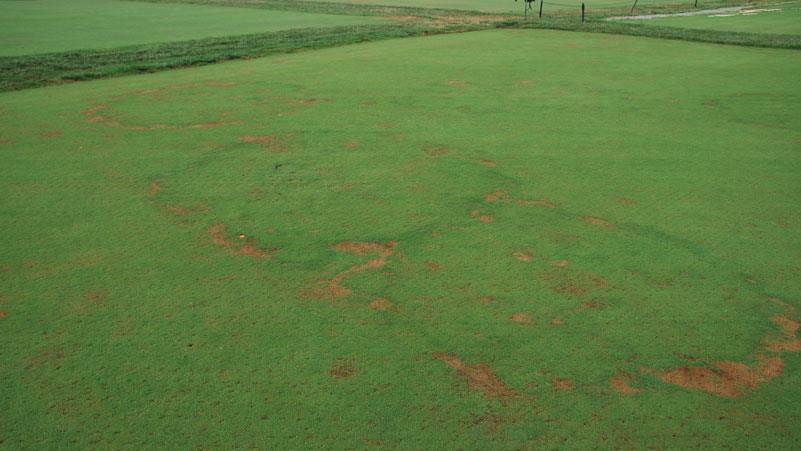
Photo – Fairy Ring | NC State Extension | 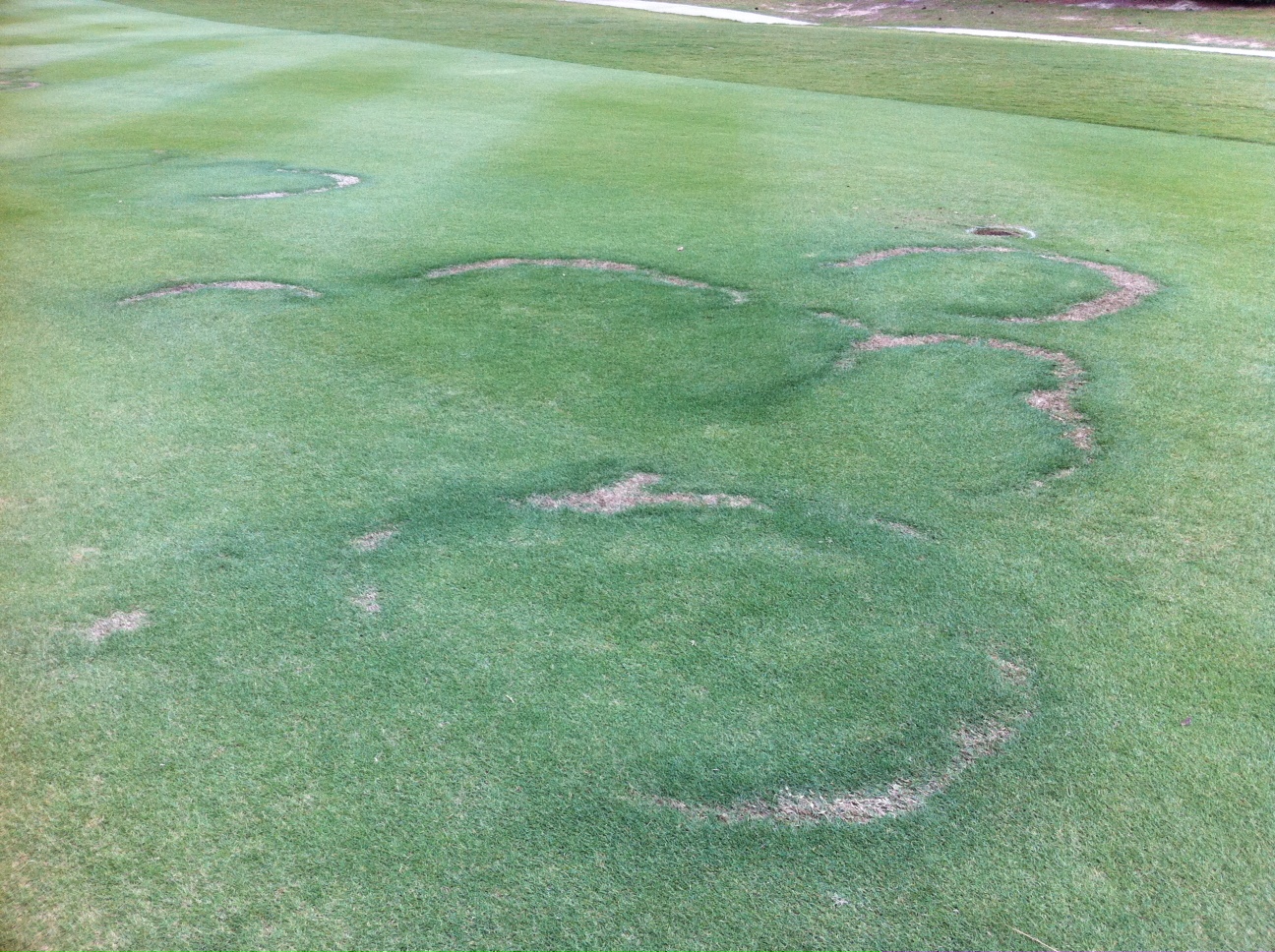 Photo – NC State Turf Pathology: Type I fairy rings in warm-season grasses |
Type 2.
Symptoms – Only Dark green and rapidly growing band of grass. no dead grass, again only sometime Mushrooms are visible.
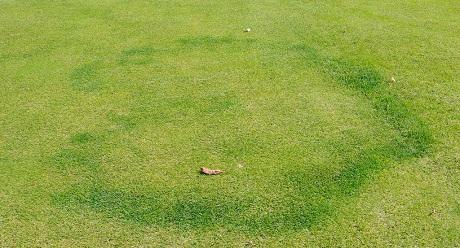
Photo – Fairy Ring Disease | Syngenta Turf & Landscape | 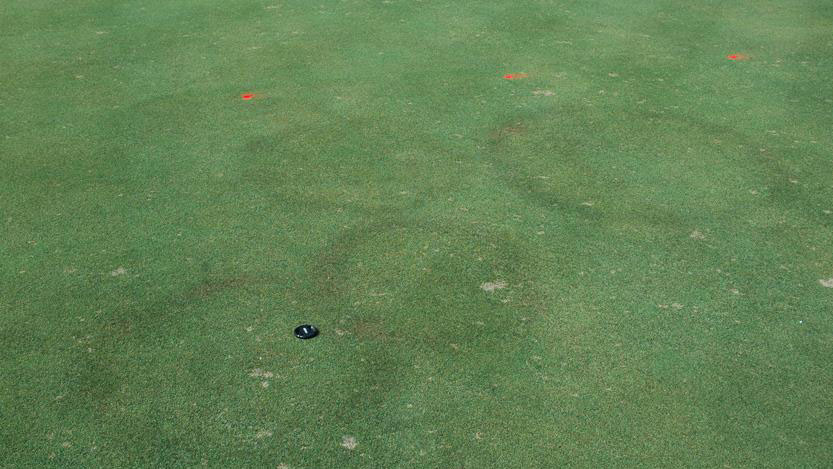
Photo – Fairy Ring | NC State Extension |
Type 3.
Symptoms – Mushrooms only, no dark circle or dead grass visible.
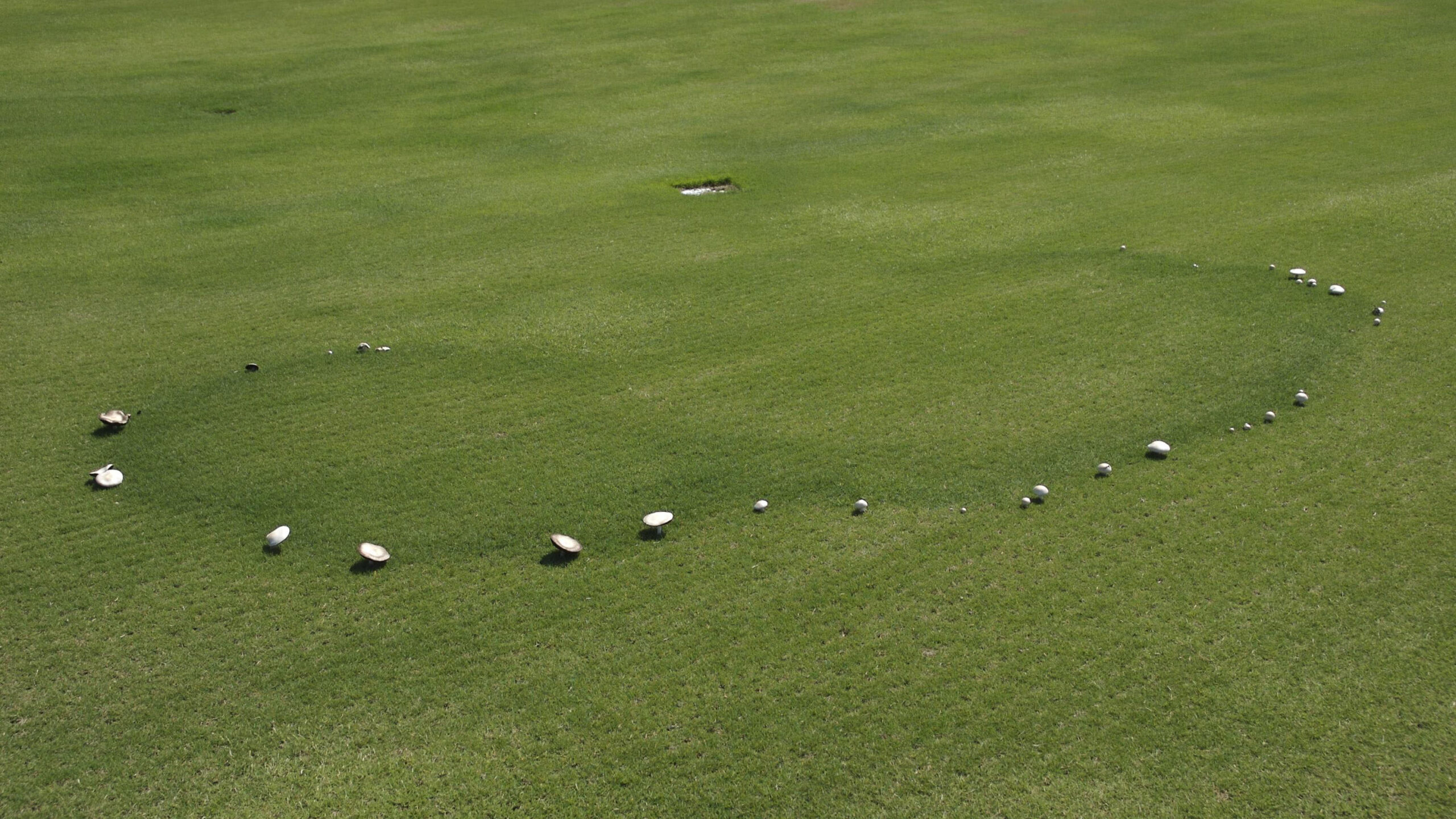
Photo – Fairy Ring | NC State Extension | 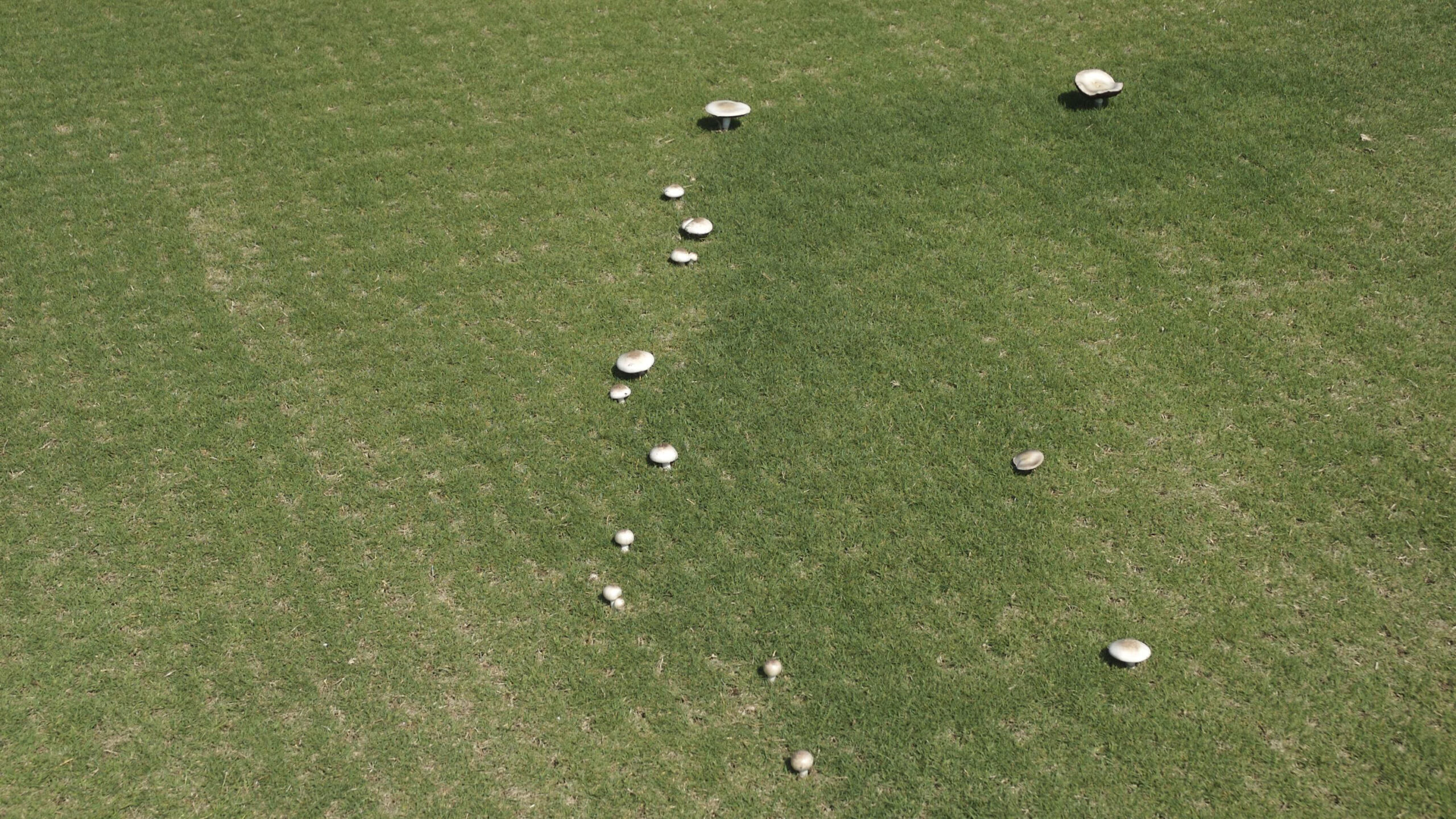
Photo – Fairy Ring | NC State Extension |
The best treatment starts with accurate turf identification, followed by a specialised lawn care program with the selected fungicide. Message Lawn Addicts for further advice on products.